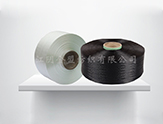
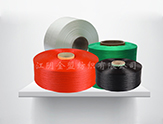
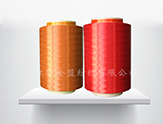
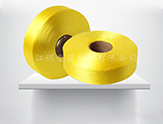
Production and application of polypropylene high-strength fibre!
Polypropylene high-strength fibre, also known as high-strength polypropylene fiber, is a synthetic fiber with excellent performance. Due to its light weight, high strength, chemical corrosion resistance and low water absorption, it has been widely used in many industrial fields.
Production process
The production of Polypropylene high-strength fibre mainly adopts the melt spinning process. First, after drying the polypropylene chips, they are heated and melted through a screw extruder to form a uniform melt. Subsequently, the melt is precisely conveyed to the spinning assembly by the metering pump and extruded through the spinneret to form primary fibers. After the primary fibers are solidified in the cooling air, they undergo multiple hot stretching and heat treatment processes. The molecular chains are highly oriented along the axial direction, thereby significantly enhancing the strength and modulus of the fibers. Finally, the filament is wound by a winding machine to produce the finished polypropylene high-strength filament. The entire production process must strictly control parameters such as temperature, stretching ratio and speed to ensure the stability of fiber performance.
Application fields of Polypropylene high-strength fibre
With its excellent performance, polypropylene high-strength filament is widely used:
In the industrial field: It is used to manufacture industrial lifting slings, protective nets, safety ropes, geogrids, etc. Its high strength and corrosion resistance ensure the safety and durability of the project.
In the textile field: As raw materials for high-end industrial textiles, such as fire hoses, conveyor belt skeleton materials, and filter cloths, it meets the usage requirements in special environments.
Medical and daily life: It is used for medical supplies such as surgical sutures and protective suits, as well as daily necessities like bags and ropes, taking advantage of its lightness and toughness.
Environmental protection and Marine engineering: In scenarios such as Marine aquaculture nets and anti-fouling curtains, its resistance to seawater corrosion and antimicrobial properties are outstanding.

















 Production and application of polypropylene high-strength fibre!