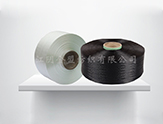
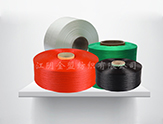
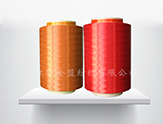
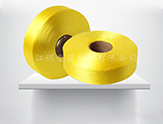
In the vast field of industrial textiles, polypropylene industrial fibre is playing an indispensable and increasingly important role. As a high-performance branch of polypropylene fibers, it has firmly occupied a core position in numerous industrial scenarios with a series of unique comprehensive advantages.
I. Core Performance: Lightweight, high strength, stable and durable
The particularly notable feature of polypropylene industrial fibre is its "lightness". Its density is only 0.91g/cm, lighter than water, and it is the lightest among all common synthetic fibers. This brings significant lightweight benefits to downstream products, especially in the fields of transportation and high-altitude operations, effectively reducing self-weight loads.
What is more crucial is its excellent strength and chemical resistance. Through modern spinning and high-magnification drawing techniques, the strength of polypropylene industrial fibre can easily meet the high standards required in the industrial field. At the same time, it inherently possesses excellent resistance to acids, alkalis and chemical corrosion, and hardly absorbs water. Therefore, it demonstrates outstanding durability and dimensional stability in damp, corrosive or repeatedly washed environments (such as the fishing, chemical and cleaning industries), and its strength is not affected by moisture.
Second, wide application: Deeply rooted in core scenarios of multiple industries
Thanks to these characteristics, the application of polypropylene industrial fibre has permeated into many key areas of the national economy:
Safety protection and transportation: From car seat belts, safety nets to various high-strength ropes and lifting slings, their lightness and high strength are the key guarantees.
Infrastructure and geotechnical materials: used for geotextiles, geogrids, etc., to reinforce roadbeds, isolate sand and gravel, corrosion-resistant and long service life.
Agriculture and fishery: Producing anti-aging agricultural ropes, fishing nets and aquaculture cages, which can maintain their performance even after long-term use in seawater.
Daily industrial products: such as tarpaulins, industrial filter cloths, various types of luggage webbing, industrial brush filaments, etc.
Iii. Economy and Environmental Protection: Practical Choices for Sustainable Development
From the perspective of cost-effectiveness, polypropylene has a wide range of raw material sources and a relatively energy-efficient production process, making it highly competitive in terms of cost performance. From the perspective of environmental protection trends, polypropylene materials themselves have the potential to be recycled and remade, which is in line with the direction of a circular economy and provides a feasible path for the green upgrading of industries.
Jiangyin Jinmeng Textile Co., Ltd. is a professional manufacturer of high-strength polypropylene industrial filament, polypropylene luminous filament, polypropylene UV-resistant webbing, polypropylene flame-retardant webbing, polypropylene webbing, polypropylene thread, polyester thread and other products. It is located in the Yunting Street Industrial Park of Jiangyin City, which is south of Taihu Lake and north of the Yangtze River, with very convenient transportation.
High-strength polypropylene filament features environmental friendliness, non-toxicity, acid and alkali resistance, light specific gravity, low thermal shrinkage rate, low thermal conductivity, low static electricity accumulation, and almost no moisture absorption. The product has great potential in industrial filament applications and can be widely used in industries such as industrial slings, safety belts, conveyor belts, woven geotextiles, filter cloths, tarpaulins, wire manufacturing, ropes and cables, etc. It is a novel textile material that partially replaces nylon and polyester.

















 Polypropylene industrial fibre holds a core position in numerous industrial scenarios